Weequahic
The Plot Against AmericaWeequahic is the Newark Jewish neighborhood where the Roth family’s familiar streets meet a wider world of religious difference, political conflict, and danger. Its western edge is described as Newark’s Jewish frontier; during the crisis of October 1942, its roads also become imagined routes by which anti-Semitic violence might reach the family’s home. The neighborhood is therefore more than a domestic setting: its boundaries make visible the precariousness of belonging and the fragile protections on which residents depend.
Setting and neighborhood landmarks
The account places Weequahic within a densely remembered local landscape. Near its western edge, St. Peter’s occupies roughly three city blocks, its bell tower and taller steeple rising above the telephone wires. The church’s high, narrow stained-glass windows and carved stone figures mark a religious world that the young narrator does not want to know. The contrast is material as well as symbolic: the church and its grounds were built decades before the first houses of the Jewish neighborhood, whose western edge later formed Newark’s Jewish frontier.
Behind St. Peter’s stands a grammar school serving about a hundred orphans and a smaller number of local Catholic children; German nuns run both the school and the orphanage. The family lore about the narrator’s brother calling out when he saw two nuns approach captures the childhood distance between the communities, but also gives that distance a comic, domestic scale. The neighborhood’s religious boundary is encountered on a street, by a child on a front stoop, rather than as an abstract dispute.
A different landmark connects neighborhood life to family origin and ritual. Nearly a mile down the Lyons Avenue hill lies Beth Israel Hospital, where the narrator and the boys he knew were born and circumcised at eight days old. The route from St. Peter’s to the hospital thus links the local geography to two contrasting forms of religious life: the church’s conspicuous towers and the Jewish family rite recalled as part of ordinary childhood experience.
A frontier crossed by politics
The neighborhood’s streets also carry national politics into family life. In 1942, when Sandy is fourteen and the narrator nine, their father takes them on consecutive Saturdays to the Newsreel Theater to see, first, the German-American Bund rally and, the following week, Franklin D. Roosevelt addressing the rally against the White House dinner welcoming Ribbentrop. The theater gives distant political conflict a local audience. The boys watch newsreels together, but Sandy has to be ordered to accompany the family: already a prominent young advocate for the Just Folks program, he has reason to find the screenings difficult.
The narrator remembers the difference in the audiences’ response. At the Bund rally, supporters chant Ribbentrop’s name; during Roosevelt’s speech, some moviegoers boo and hiss while others, including the boys’ father, applaud. The child imagines that fighting might break out on Broad Street and that downtown Newark might be left in ruins. That fear makes the theater an extension of Weequahic’s civic space: political divisions are not safely distant from home simply because they appear on a screen.
The neighborhood under threat
The danger becomes more immediate on October 15, when violence elsewhere prompts emergency meetings at four schools enrolling nearly all of Newark’s Jewish elementary-school pupils. A sound truck has asked residents to spread the word, and the meetings are organized under the Committee of Concerned Jewish Citizens. Mayor Murphy promises police protection across much of the South Ward. The geography of the response is specific: patrols are planned for streets west of Weequahic, bordering Irvington, and south toward Union County, including Hillside and Elizabeth.
Those place names carry reports of recent attacks. A Jewish-owned liquor store in Irvington has been broken into, looted, and burned; synagogue windows have been smashed in Hillside; and graves have been desecrated in Elizabeth. The emergency measures are thus mapped onto a threatened perimeter around the Jewish neighborhood. The mounted police are assigned to patrol the bordering streets, including a deployment of two platoons of twelve, divided among four precincts.
Roads, horses, and childhood fear
The Newark–Hillside line passes only a couple of hundred yards south of the Roth home. With the windows closed, the child can still hear the mounted police clattering up and down the Keer Avenue hill. From his bedroom window he listens as they move toward the point where Summit Avenue becomes Hillside’s Liberty Avenue. Liberty leads to Route 22, which runs west through Union and then south. The sequence of ordinary roads becomes, in the child’s imagination, a channel through which anti-Semitic fury might travel eastward and pour into the family’s alley and up the back stairs.
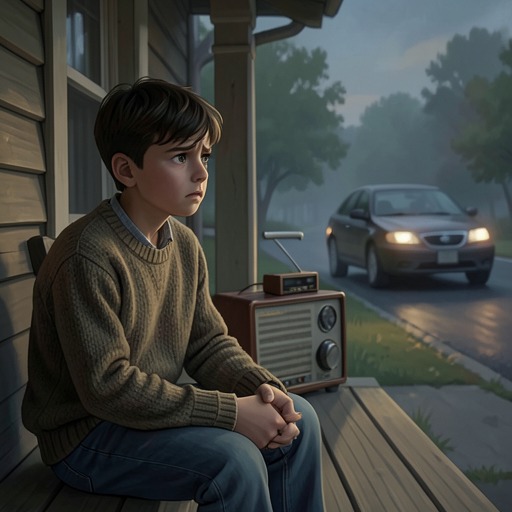
The horses interrupt that imagined advance. Their gleaming bodies appear to the narrator as a sturdy barrier, and their presence turns the rabbi’s request for protection into something he can hear from home. This sense of safety is not simply abstract: the police horses patrol near the boundary he fears, while telephone service is strained because the Army has commandeered Bell Telephone’s facilities. His mother leaves for an emergency meeting at Chancellor Avenue School; he stays behind to answer the phone and wait for word from his father and brother, who have been away with Seldon. Joey Cucuzza comes over to keep him company, but the long-distance call does not arrive that evening.
The contrast between the neighborhood’s ordinary routes and their sudden ominous significance gives Weequahic its narrative force. Summit Avenue, Liberty Avenue, and Route 22 are familiar points on a map, yet in the child’s perception they organize both the possibility of invasion and the line of defense against it. The police horses offer reassurance, but the need to listen for them reveals how exposed the family feels. Weequahic’s identity as a Jewish neighborhood is consequently shown through daily landmarks and shared institutions, and tested by the violence gathering beyond its borders.